 0
0
 0
0
New Year is an important day in most countries around the world. After all, it marks the beginning of a new calendar year. Keep reading to find out some of the interesting traditions of people in Kenya, Chile, Malta, Japan, and Ireland on this holiday!

Kenyans have many ways to celebrate New Year, most revolving around parties, clubs, and attending church. New Year’s day is used as a time for reflection and goal setting or resolution-making for the year ahead. In Swahili, one of the official languages of Kenya, New Year is called Mwaka Mpya. As mentioned earlier, the devout Kenyans go to church through midnight to celebrate this holiday by praying to their God. Others attend parties or go to nearby clubs. Many also light fataki (fireworks) and scream “sikukuu ya mwaka mpya!” (Swahili for “Happy New Year!”) as the clock hits midnight.
On New Year’s Day, it is common to get together for meals in the morning and afternoon. At these get-togethers, foods like chapati, goat, mukimo (pea-based dish), rice, stew, and potatoes are eaten. People gather for activities such as the beach, parks, and dancing during and after these meals. Some children also receive presents like clothes or toys on this day.

Most Chileans get together with family and friends to celebrate this holiday. Popular things consumed during New Year’s include “cola de mono” (mainly made up of alcohol, coffee, and milk), champagne, wine, beer, and of course, eating grapes. Many Chileans follow the tradition of eating 12 grapes during the countdown to midnight for good fortune in the upcoming year; each grape representing each month of the year. Some people even make a wish for each grape they eat.
Other traditions include wearing colorful underwear for good luck, rolling an empty suitcase around the neighborhood to bring new adventures, and putting money in your shoes for wealth. Eating three spoons of plain lentils is also done to bring health, wealth, and love in the new year. Lastly, like in most countries around the world, the Chilean night skies are lit with fireworks, with the best and most unforgettable views at Torre Entel in the capital city of Santiago.
Malta
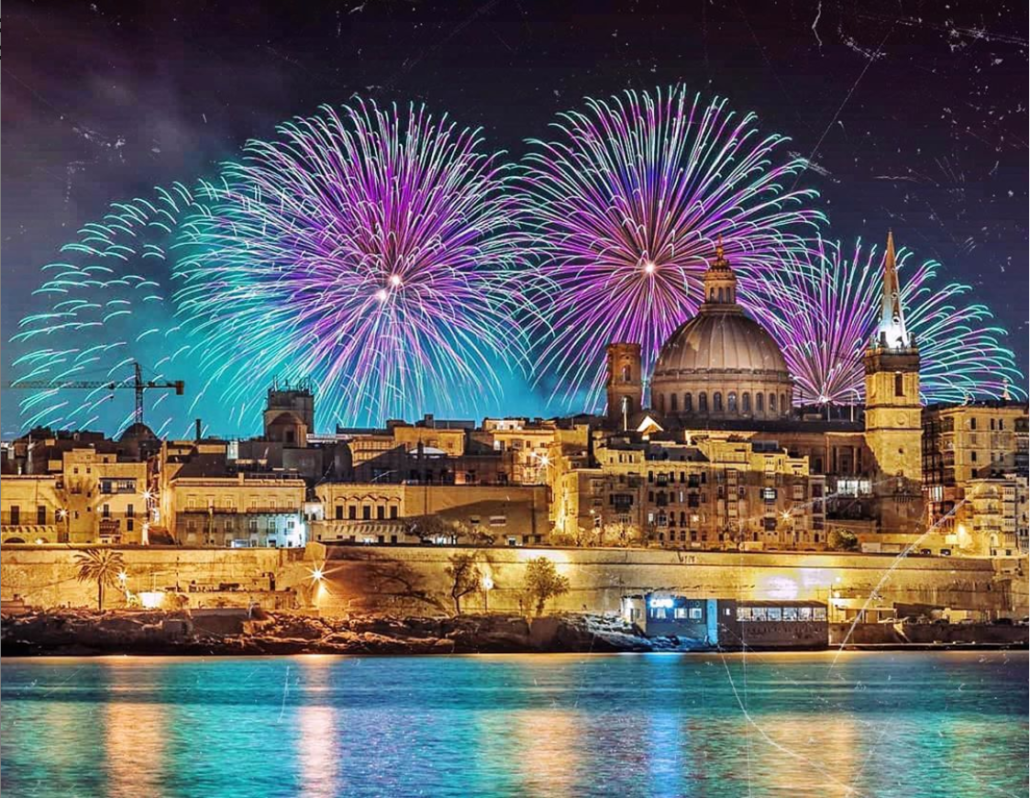
In Malta, the most common celebrations for New Year’s Eve, like in other countries, are going to parties and clubs, and lighting fireworks. People often travel to the cities of Valletta and Floriana for these celebrations. At midnight in Valletta, a pyrotechnic display and firework show takes all the attention of the partygoers.
On New Year’s Day, many welcome the new year with a family lunch after a restful morning recovering from the partying done the previous night. The Maltese often enjoy a visit to the countryside for a stroll during the afternoon.
Japan

In Japan, many people partake in family gatherings and parties for New Year’s. Many also decorate their houses and towns.
New Year’s is a day of many traditions for most Japanese people, here is a couple of them. The first tradition is a deep clean of their homes as a way to ensure a clean start to the new year; they call this oosouji which is Japanese for “big cleaning”. At gatherings, it is a tradition to eat certain foods. These include toshikoshi soba, ozoni, otoso and osechi. Toshikoshi soba, a symbol for longevity, is specifically eaten. A prominent tradition is giving money to children, and sometimes to adults. Some spend this money on fukubukuro, or surprise bags. This popular tradition, however, involves a risk as one is never sure what is inside the bag and may then regret wasting their money. Lastly, many families in Japan perform Hatsumode, which is the first visit to the shrine of the year at Meiji Shrine in Tokyo, for example. This is a way to “pay their respects” as well as a way to wish for “a happy and healthy year ahead.”
Ireland

In Ireland, many people celebrate this holiday through parties and dinners. Some also celebrate at the pub with friends. But more importantly, all feature a countdown to midnight to welcome the new year. Fireworks and parades are often seen, especially in the bigger cities.
There are many traditions performed by Irish people during this holiday, here are just a few. Firstly, like the Japanese, many Irish people clean their houses and restock their food supplies to have a “fresh start” to the year. At gatherings, Irish people hold importance to who walks first into the door. For example, a dark-haired handsome man would be seen as good luck while a red-haired woman was seen as bad luck. Families may set up the order for walking into the door, however, to ensure only good luck for the coming year. Other traditions are in remembrance of the family members who have passed away: setting a place for them at the table, despite leaving it empty and leaving the door unlocked to ease their spirit’s entry into the house. Another tradition in Ireland includes hitting a loaf of bread against the walls of the house to fend off bad luck or spirits. It is also seen as a way to attract good luck and bring in plentiful bread in the new year.


