 1
 0
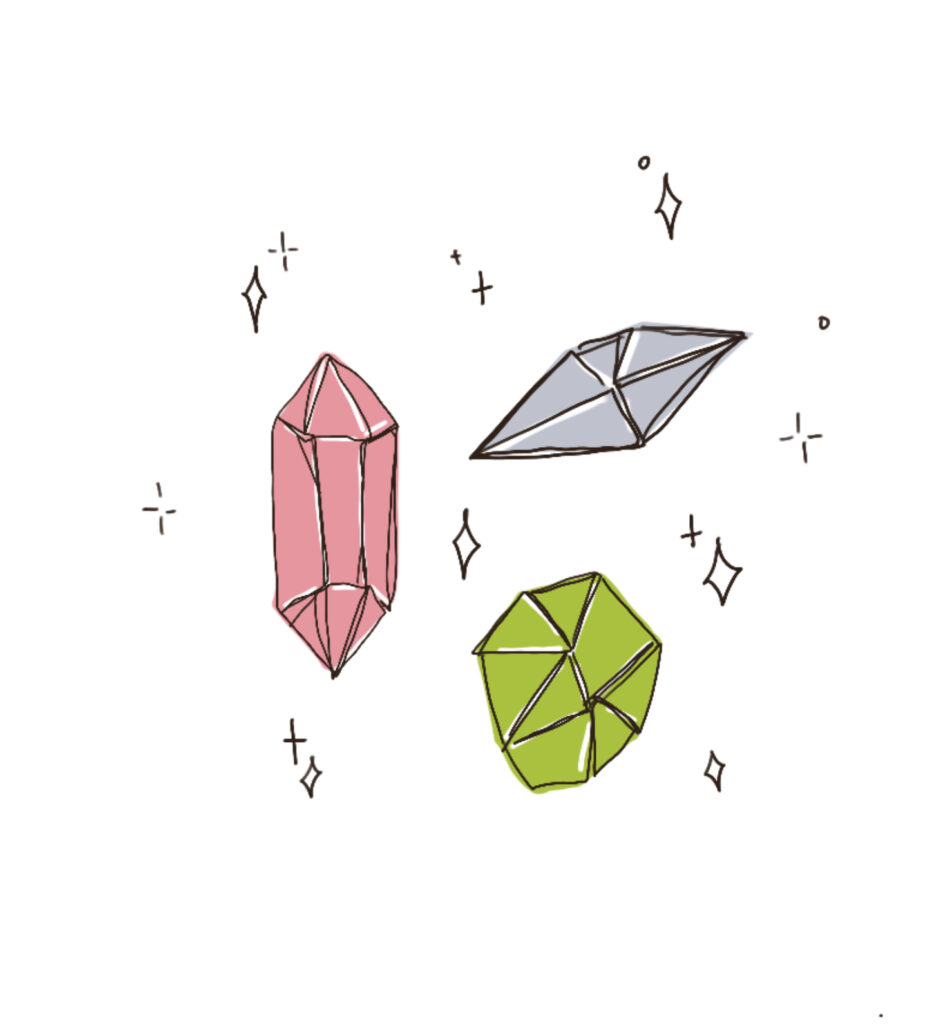
Healing crystals are a controversial topic. Some swear by their healing properties while others roll their eyes in annoyance and confusion. Despite the uncertainty of their credibility in terms of “healing”, they have persisted in popularity for many years and have been used by a variety of cultures: ranging from the Egyptians to the Hopi Native Americans of Arizona. So if they haven’t been scientifically proven to do anything, why is it that people are still attracted to them? Is there some truth to their healing claims?
The “Pro-crystal” argument
The main claim to the power of crystals is their healing abilities. But what exactly are these “healing” properties they possess? Well, “Crystal healing is a type of alternative therapy that involves using gemstones to bring balance to an individual’s life and mind.” Different crystals have a variety of properties, working by interacting with your body’s energy field. For example, popular crystals like Jade and Amethyst carry the properties of “longevity, purity, fertility, wisdom, peace” and “healing of mind, body, and soul.” Many people also use crystals to assist with meditation, claiming that “[crystals] can deepen your meditation, provide a focus object, and raise your consciousness and awareness of your higher self.”
The “It’s a pseudoscience…” stance
While some believe crystals are powerful in terms of their abilities, others greatly doubt this idea. Scientifically, there is no evidence to prove that crystals induce relaxation. However, some believe they may prompt a placebo effect on the user. A study showed that when people were given a real piece of quartz and a counterfeit crystal made of glass, they experienced and reported similar sensations such as tingling, heat, and vibrations, if they were told in advance they could experience them. Essentially, these experiences were a product of suggestion and not necessarily the power of the crystals.
The ethics of crystals
With their popularity increasing, counterfeit crystals have also increased. In early 2021, crystals and minerals were said to be a multi-billion dollar business. With this, numerous problems appear: labor, accountability, and sustainability. Crystal mining, in particular, has a negative impact on the environment as well as in regard to human rights. Some crystals are mined in countries like the DRC and Afghanistan, where most jobs are unsafe, pay low wages, and are performed by underage workers. Many sellers of crystals are not required to state where the crystals have been sourced, which leads to accountability for the unethical harvesting of their products. In terms of sustainability, crystals are a non-renewable resource, tying back to the ethics of how they are sourced. Overall, some thought and caution should be taken due to how crystals are collected, and the issues that derive from them.
Should crystals be entirely disregarded because their “healing” properties are largely placebo-based? Not entirely. If users are feeling a positive effect from using them, then they should continue, however, they should know crystals are not all-powerful entities and can not replace the benefits of modern medicine. In addition to the weariness of their healing benefits, the way crystals are sourced should also be something consumers should keep in mind when purchasing crystals. While there are positives to crystals, there are still negatives that shouldn’t be overlooked purely for the “aesthetic.”


