 1
 0
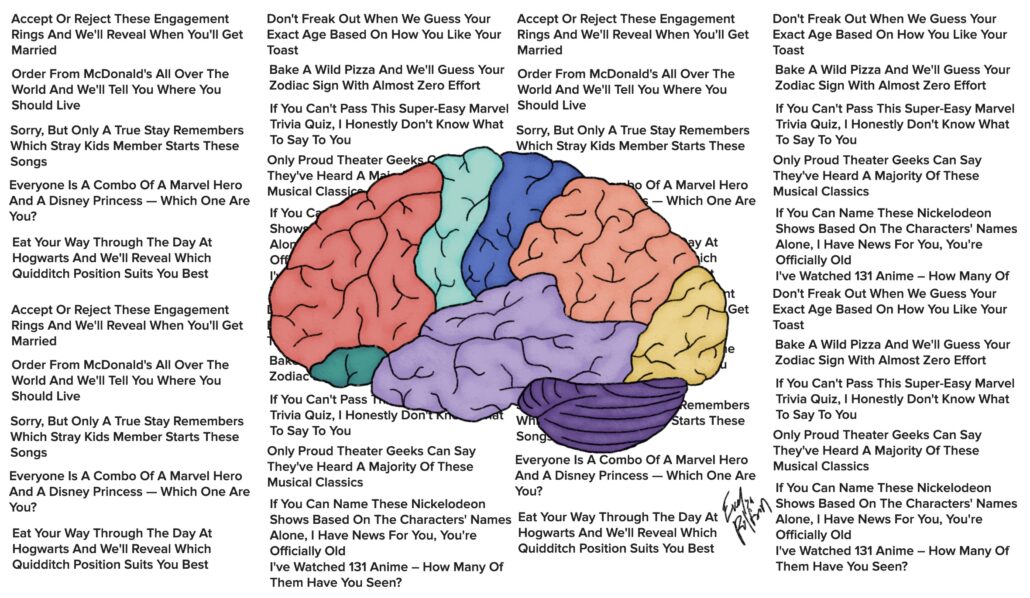
When sitting in class with friends or pushing back that late assignment, personality quizzes seem like the perfect way to pass time. Anything that defines us or promises to explain a certain aspect of our personality is extremely appealing to people’s minds – but why?
“People like confirmation of their qualities, particularly strengths. In spite of the frivolity, we all have an existential craving to be validated and ‘seen,’” says Pamela Rutledge, director of the Media Psychology Research Center. Sure, most of us don’t take these personality quizzes too seriously – after all, they’re usually very short and therefore struggle to accurately portray who we are and how we think. The topics are usually pretty lighthearted as well, with the most popular BuzzFeed quizzes being centered around topics such as food, relationships, zodiac signs, TV, and movies, which are all considered interesting and fun to explore, but not taken too seriously by the general public. This being said, a lot of us still feel a strong sense of validation when being described in quiz “results”, and truly believe the self-analysis and establishment of individual differences that come with taking such quizzes.
This desire for self-understanding and evaluation dates back as far as the Pre-Socratics in Early Greece, where physiological measurements and comparisons were explored through philosophy. Rutledge writes about a certain approach, called The Four Temperaments, that has “been a recurring taxonomy of individual differences; Hippocrates described how four bodily fluids, or ‘humors,’ affected human personal traits and behaviors. These were translated by Galen to four temperament categories: sanguine, choleric, melancholic, and phlegmatic. These four traits have also been associated with the four basic elements, the four seasons, with links into various aspects of astrology.” By categorizing simple concepts with certain behaviors or traits, we tend to feel better about ourselves because of the pride we take when being described positively, and may even feel motivated to live up to certain described traits, which can be helpful for trying to improve ourselves but also harmful in certain ways.
See, the issue with categorizing ourselves into specific personality groups like most of these quizzes do is that they have the potential to create unnecessary insecurities or guilt surrounding the way we act. If we receive results we don’t want, time and time again, they could make us feel bad about ourselves – and want to change ourselves to fit a certain group or “aesthetic” of behaviors or general characteristics.


